


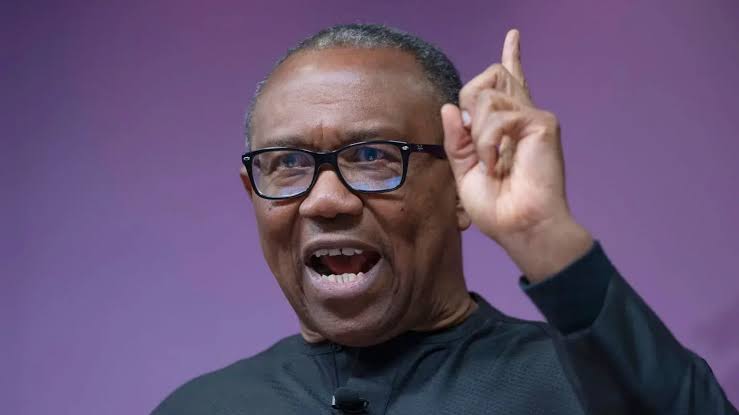
Peter Obi, the presidential candidate of the Labour Party in the February 25, 2023 elections, has strongly criticized the Revenue Mobilisation, Allocation and Fiscal Commission (RMAFC) for its recent proposal to increase the salaries of elected politicians by 114 percent.
Obi expressed his disapproval through a series of tweets on his verified Twitter handle, branding the recommendation as insensitive and calling for a reassessment of national priorities.
In his tweets shared on Thursday, Obi highlighted the dire economic situation faced by millions of Nigerians, including those struggling with the minimum wage and the staggering number of over 133 million people living in abject poverty.
He firmly stated that a salary increment for politicians should not be the focus when the majority of the population is grappling with numerous economic challenges.
Obi wrote, “I learnt with great reservation, the approval of a 114% increase in the salaries of elected politicians, including the President, vice president, governors, lawmakers as well as judicial and public office holders by the Revenue Mobilisation, Allocation and Fiscal Commission.”
The former presidential candidate emphasized that the timing of such a salary increment was inappropriate, given the harsh economic realities faced by the average Nigerian.
He urged leaders and public officeholders to prioritize cutting the cost of governance and addressing the plight of Nigerians who have been burdened by recent reform measures that have significantly increased living costs.
Obi emphasized, “One would expect the leaders and public officeholders to focus on cutting the cost of governance, alleviating the sufferings of Nigerians. This moment calls for creative ways of pulling the majority out of poverty.”
Drawing inspiration from Shakespeare’s Julius Caesar, Obi stressed the need for leaders to prioritize the needs of the masses and those in lower socioeconomic strata.
He urged them to demonstrate selflessness and reverse the proposed salary increment immediately, redirecting the savings towards critical sectors such as education, healthcare, and poverty alleviation, particularly in remote rural areas.

