


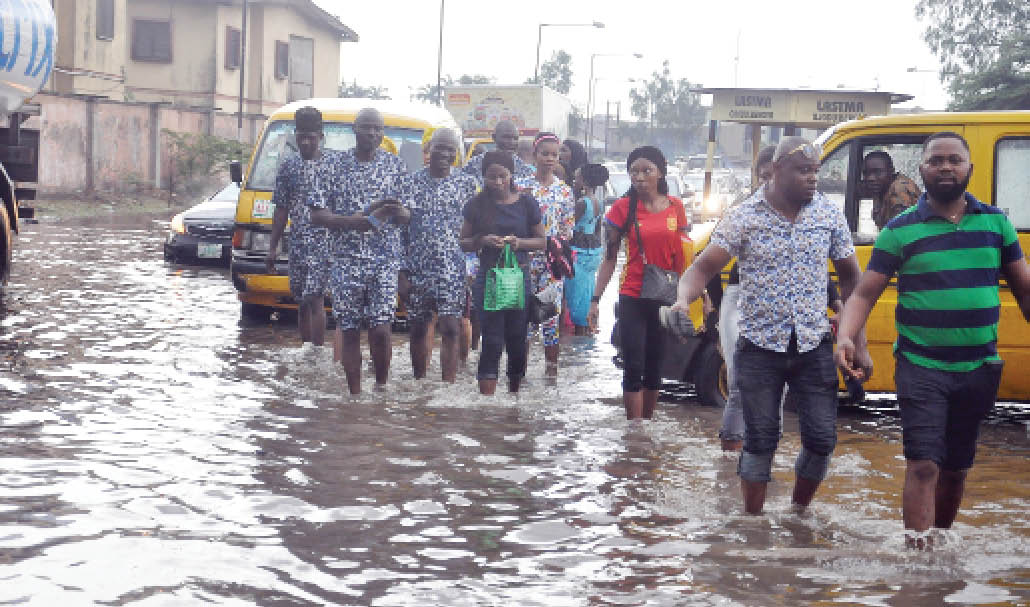
The Federal Government has issued a grave warning in the wake of recent torrential rains, revealing that floods have submerged 21 local government areas (LGAs) across 10 states and the Federal Capital Territory (FCT).
During a Thursday briefing in Abuja, Minister of Water Resources and Sanitation Engr Joseph Utserv, alongside Minister of State for Water Resources and Sanitation Bello Goronyo and the Director General of the Nigeria Hydrological Services Agency (NIHSA), highlighted the widespread impact of the ongoing rainfall.
“The torrential downpour has triggered flash and urban floods, exacerbated by blocked drainage systems,” stated Engr Joseph Utserv. “This has led to significant displacement of residents and substantial property damage.”
Earlier this year, NIHSA’s 2024 Annual Flood Outlook (AFO) identified 148 LGAs across 31 states as high flood risk areas. The ongoing flooding has confirmed these predictions, impacting states like Adamawa, Anambra, Edo, Lagos, and others.
“In addition to the immediate impact on communities, the flooding poses risks of escalating the cholera outbreak, which has already claimed lives and affected thousands,” the minister highlighted.
He further emphasized the upcoming challenges, stating, “River flooding is expected to begin this month in states within the Niger Basin. States like Akwa Ibom, Anambra, Delta, and others are advised to prepare for potential inundation.”
The government has urged proactive measures, including clearing blocked drainage systems, relocating vulnerable communities, and enhancing flood resilience through infrastructure improvements. Efforts are also underway to closely monitor dam operations and upstream river conditions to mitigate further risks.
Meanwhile, the National Emergency Management Agency (NEMA) has identified specific LGAs in Anambra State at high risk and called for collaborative efforts to mitigate potential disasters during the rainy season.
As the situation unfolds, federal and state authorities continue to mobilize resources and raise awareness to minimize the impact of flooding on lives and livelihoods across affected regions.

